Die Elektrifizierung des Schwerlastverkehrs (>3,5t) nimmt Fahrt auf, doch die Sorge vor der lückenhaften Ladeinfrastruktur bleibt der größte Bremsklotz für Flottenbetreiber. Allerdings zeigt eine Analyse des International Council on Clean Transportation (ICCT) aus dem November 2025 nun: Es braucht weniger Megawatt-Lader als gedacht, doch auch diese geringere Anzahl stellt das Stromnetz vor völlig neue Herausforderungen.
Laut dem ICCT-Report wird die EU bis 2030 eine installierte Ladeleistung von 22 bis 28 Gigawatt (GW) benötigen. Die neue Erkenntnis: Diese Leistung verteilt sich fast zu gleichen Teilen auf private und öffentliche Standorte.
Der Großteil der Infrastruktur (ca. 150.000 bis 175.000 Ladepunkte) wird in privaten Depots entstehen. Hier laden die Trucks langsam und kosteneffizient über Nacht. Für den öffentlichen Raum prognostiziert das ICCT einen Bedarf von 60.000 bis 80.000 Ladegeräten, um die gesetzlichen CO2-Flottenziele zu erreichen.
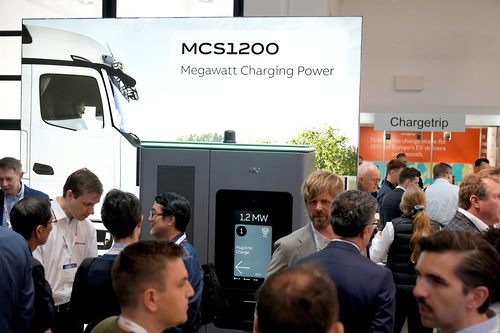
Ein zentrales Ergebnis der Untersuchung ist die Rolle der Megawatt-Ladepunkte (MCS). Nach 4,5 Stunden Fahrzeit müssen Fahrende eine 45-minütige Pause einlegen. Das Laden in diesem Zeitraum kann essenziell sein. Ein Umparken des E-Lkw würde die Pause nichtig machen und diese müsste neu starten. Streng genommen ist das Umparken während der Pause nach 4,5 Stunden Fahrzeit verboten, da in der Pause das Fahrzeug nicht bewegt werden darf. Eine Sonderregelung für das Umparken nach dem Laden gibt es aktuell noch nicht.
Die Analyse zeigt dennoch, dass bereits 4.000 bis 5.300 öffentliche MCS-Ladepunkte EU-weit ausreichen könnten. Das entspricht lediglich 2 Prozent der gesamten Ladepunkte, die jedoch rund 15 % der installierten Leistung bereitstellen. Interessant ist dabei, dass mehr als die Hälfte des öffentlichen Schnellladebedarfs weiterhin durch herkömmliche 350-kW-Lader (CCS) abgedeckt werden kann, was die Netzinfrastruktur an vielen Stellen massiv entlastet.
Der Report warnt jedoch vor der punktuellen Überlastung der Stromnetze. Ein einziger MCS-Ladepunkt kann eine Spitzenlast von über einem Megawatt ziehen. Wenn an einem Autobahn-Rasthof mehrere dieser Lader gleichzeitig aktiv sind, kann das lokale Verteilnetz schnell an seine Grenzen stoßen.
Um eine Überlastung der veralteten Netzstrukturen und Netzausbaukosten zu vermeiden, betont das ICCT zwei Lösungswege:
Damit die Transformation gelingt, identifiziert der Report klare Handlungsfelder für Politik und Energiewirtschaft:
Die Daten des ICCT geben Planungssicherheit. Für Flottenbetreiber und Investoren wird deutlich, dass die Mammutaufgabe „E-Lkw“ bewältigbar ist. Der Schlüssel liegt nicht in einer flächendeckenden Megawatt-Infrastruktur an jeder Ecke, sondern in der klugen Kombination aus effizientem Depot-Laden und einer strategisch platzierten, netzdienlichen Hochleistungsinfrastruktur an den Hauptverkehrsachsen.