There is a clear vision: millions of electric vehicles serving as mobile storage units. Vehicle batteries can store electricity and release it into a building, to a technical device or into the power grid when needed. This allows electric vehicles to help balance fluctuations caused by power generation from wind and solar, stabilize grids and reduce energy costs. Bidirectional charging is considered a key technology for the energy transition. Following the success of last year’s special exhibit on bidirectional charging, Power2Drive Europe is revisiting the topic from June 23–25 at Messe München. The Bidirectional Zone in hall C6 is the place to learn about practical applications, viable business models and large-scale implementation. Guided tours will be offered daily. June 23 will see the presentation of the study Plug, Store, Profit – Economic Potential of Bidirectional Fleets, conducted by the German Research Center for Energy Economics (FfE) on behalf of Power2Drive Europe. Power2Drive Europe, the international exhibition for charging infrastructure and e-mobility, is part of The smarter E Europe, the continent’s largest alliance of exhibitions for the energy industry. Over three days, around 2,800 exhibitors will present their products and more than 100,000 visitors are expected.
Bidirectional charging can benefit both businesses and private households. It allows them to reduce energy costs while potentially generating additional revenue. Electric vehicles store surplus electricity from renewable energy sources and feed it into the home or company grid, (Vehicle-to-Home, V2H, or Vehicle-to-Building, V2B), the public grid (Vehicle-to-Grid, V2G) or to external consumers (Vehicle-to-Load, V2L) later.
A recent analysis by Agora Energiewende estimates that by feeding electricity into the grid, private individuals in Germany could generate annual revenues of around 500 euros by 2030. Under favorable conditions, the electricity costs associated with an electric vehicle’s annual mileage could even be fully offset. Depending on electricity prices and market conditions, such revenues could be higher still if the vehicle is charged using electricity from an on-site photovoltaic system. Bidirectional charging is also attracting interest from industrial and commercial operators with large vehicle fleets. In addition to potential revenue streams, they can benefit from greater independence and flexibility. About one-third of German companies plan to invest in electric vehicles, and more than a quarter intend to build their own charging infrastructure.
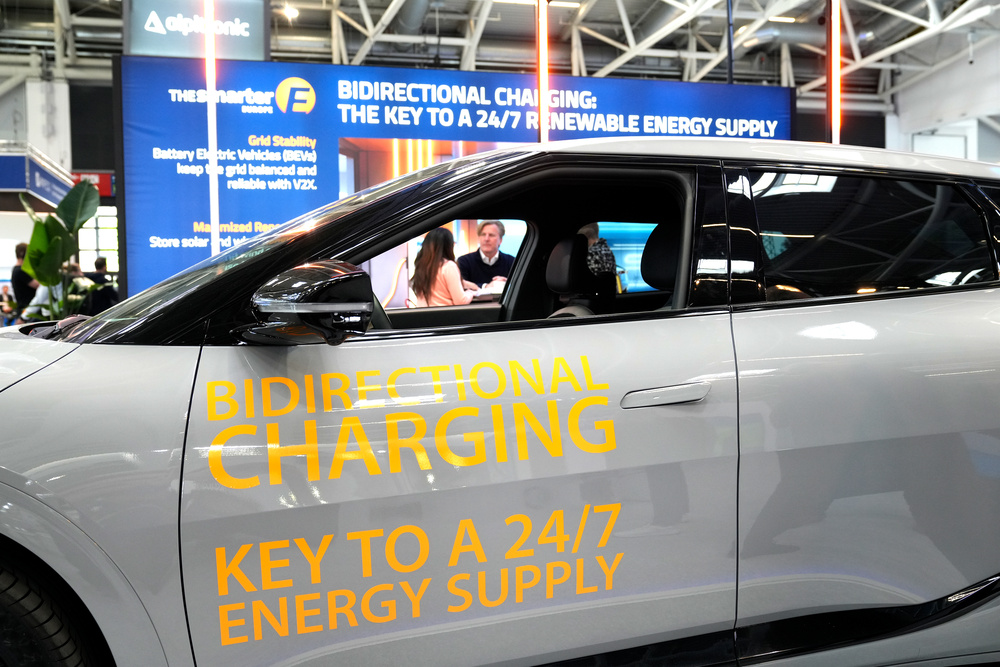
Bidirectional charging offers considerable potential. It can help regulate frequency, provide emergency power and significantly reduce the costs associated with both the energy and transportation transitions. In October 2024, a study by Transport & Environment concluded that V2G alone could save more than 100 billion euros in system costs across the European Union between 2030 and 2040. In Germany, reduced requirements for grid expansion and more efficient use of renewable energy could result in savings of up to 8.4 billion euros.
The number of electric vehicles is expected to rise significantly across many European countries in the coming years, which will create challenges for power grids. However, peak loads and the volatility of renewable energy generation can be mitigated by bidirectional charging. The technology has already moved beyond the pilot phase and entered the market. Vehicle models and EV chargers that support bidirectional charging are commercially available. While the ISO and the IEC have developed a common standard for communication between EV chargers and vehicles, the Dutch city of Utrecht is already setting global benchmarks for integrating this technology into everyday life. Its fleet of more than 100 bidirectional car-sharing vehicles is scheduled to expand to 500 this year
Early regulatory and technical steps mark an important milestone in advancing broader adoption in Germany. Markus Elsässer, founder and CEO of Solar Promotion GmbH, explains: “The elimination of double grid charges, effective since January 2026, was a real game-changer. Combined with the planned MiSpeL process (market integration of energy storage systems and charging points), it could eliminate the need for secondary meters. This makes bidirectional charging technically simpler and, crucially, economically viable. The new MiSpeL process rules issued by the Germany Federal Network Agency make the technical implementation simpler by doing away with the need for a costly second meter for V2G operation. Advanced metering infrastructure (AMI) records electricity flows at 15-minute intervals. Electricity drawn from and exported back into the grid can be measured and compensated accurately in both directions. The key challenge now is establishing a comprehensive system encompassing electric vehicles, charging infrastructure, energy management and grid integration.
On June 23 at 3:15pm, the study Plug, Store, Profit – Economic Potential of Bidirectional Fleets will be presented at booth C6.450. Conducted by the Research Center for Energy Economics (FfE) on behalf of Power2Drive Europe, the study examines the practical benefits that a transition to bidirectional fleets could bring for fleet managers and operators. It explores a wide range of aspects, including potential savings, leasing and insurance considerations, tax exemptions and warranties. “The study provides important guidance and decision support for companies. It clearly demonstrates that the future belongs to bidirectional fleets, As they combine sustainable mobility with economic value creation for businesses," says Jens Mohrmann, Managing Director of Freiburg Wirtschaft Touristik und Messe GmbH & Co. KG (FWTM).
The Power2Drive Forum will host several presentations on bidirectional charging. On June 23 at 3:00pm, Bidirectional Charging: From Use Case to Economic Reality (in English), on June 24 from 3:00pm Bidirektionales Laden in Deutschland und Frankreich – Erfahrungen, Hemmnisse, Perspektiven (Bidirectional charging in Germany and France – Experience, Hurdles, Prospects” and on June 25 from 10:45am, Vehicle-to-Grid in Practice: Creating Value Across the Entire Energy Ecosystem (in English).